What is Taalrijk?
Language is the foundation for almost everything a child does: talking, playing, learning, and making contact. With Taalrijk, we help children aged 0 to 12 build that foundation step by step. In this way, we give children equal opportunities in their language development from an early age.
Taalrijk is our own language program, specifically designed for childcare. It helps us to offer children a rich language environment even more consciously. In doing so, we ensure that children come into contact with language throughout the day. Not just by listening, but especially by participating. We talk with children, ask questions, play along, tell stories, read aloud, and connect with what is on their minds. Children are encouraged to tell stories, discover, and think along themselves. This way, language becomes something they not only learn, but truly experience.
Why Taalrijk?
A good language foundation is important for children's development. For example, for making contact with other children, expressing feelings, and learning new things. They will benefit greatly from this, both now and in the future.
Unfortunately, not all children grow up with the same linguistic richness. As a result, some children need a little extra support. We can make a significant difference in this regard, especially in childcare. That is why we developed Taalrijk. A language program that fits the daily routine at the childcare center and connects with the children's world of experience.
We developed the program based on scientific research and the working methods at the location. These insights have been translated into concrete activities, play and development materials, and training for our pedagogical professionals. This is how we make language fun, recognizable, and understandable.
Discovering, fantasizing, and telling stories together in the language corner
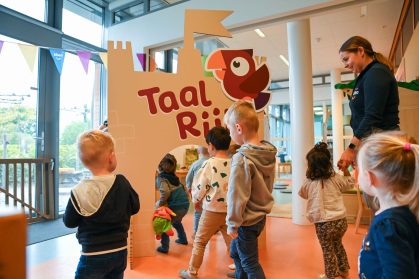
At every branch you will find soon a language corner: a nice, inviting place where children engage with language through play. Think of a storytelling and discovery area, a cozy reading nook, and materials. like story stones. With that, children come up with their own stories and let their imagination run wild. In short, the place to engage with language through play.
Examples Language Rich
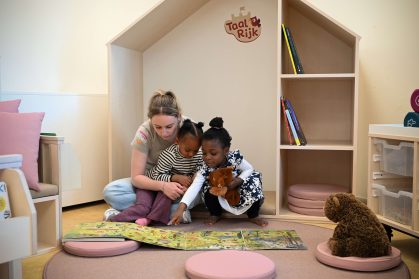
The language corner with reading nook and reading bench
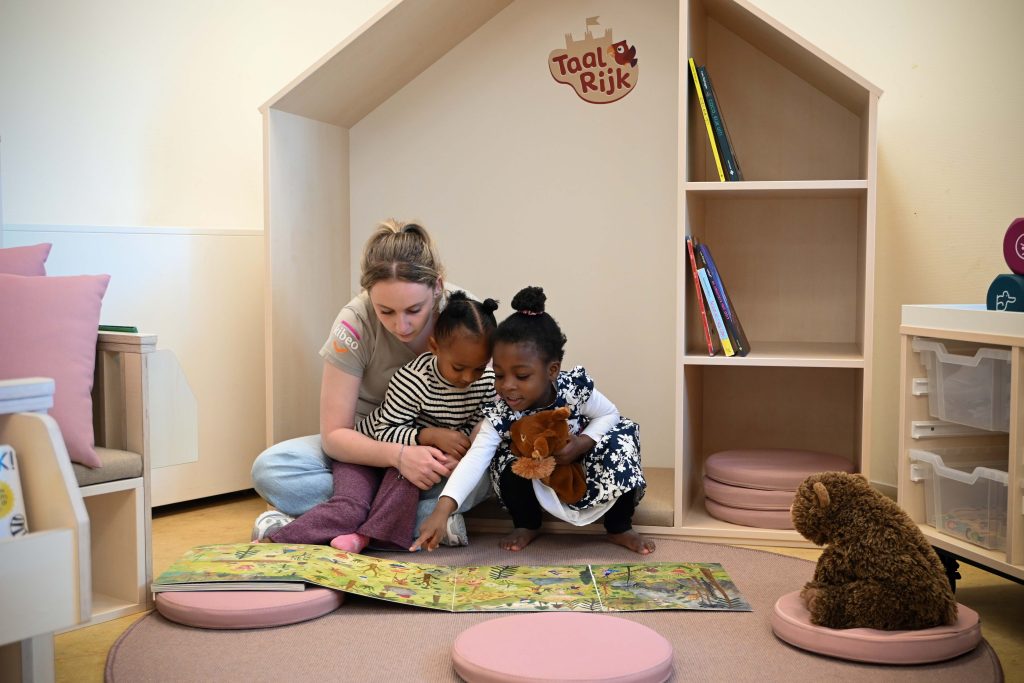
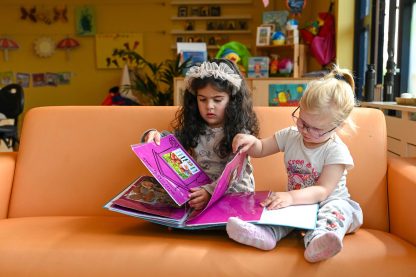
The language corner is an inviting place filled with books and materials that encourage children to engage with language. With a reading nook and reading bench, we create a quiet spot where children can read books and experience stories independently or together. In this way, children are encouraged to read at their own pace, stimulate their imagination, and playfully strengthen their language development.
The story stones
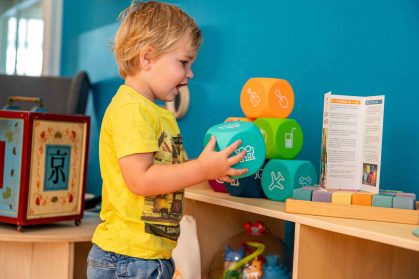
The story stones
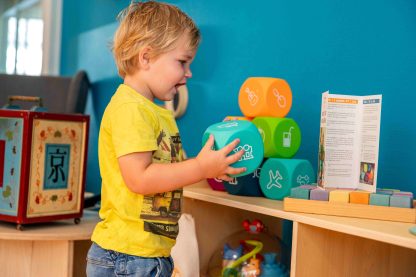
The story stones are large dice with recognizable images that invite children to fantasize, tell stories, and create talescollect. A nice way to with to be occupied with language, where the joy of language takes center stage and childlearn to develop their vocabulary, narrative thinking, and self-confidence through play. By stimulating young children's language, Kibeo lays an important foundation for their future.
Storytelling discovery place
Storytelling and discovery area full of books and materials
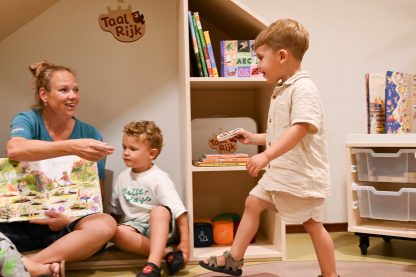
In the storytelling and discovery corner, it often starts with a book and accompanying materials. Children immerse themselves in the story, get involved, and act it out. That is how the story truly comes to life.
By being active together, lerunning children nunderstand and remember new words better. Language thus becomes not only something that they learn, but especially something that she togetherven.
Diverse selection of books
Children choose a book of your own that goes with itn fits. We ensure a varied selection, tuned by age, developmental level, and interests. The books also tie in with current themes., such as seasons, animals, friendship and emotions.
Books are everywhere on to find the group, on children's eye level. That way, they are always close by. and reading becomes a fixed part of the day.
Interactive reading aloud and storytelling
We read aloud to the youngest children every day, from babies to toddlers. At the after-school care, we read aloud or the children read to themselves.f or together. During the reading aloud, we will go with the children in conversation and we ask questions. That is how we discoverknow children new words and learning she to start a conversation with each other. Reading aloud is not only educational, but also a very nice and cozy moment together.
With storyboards, search-and-find pictures, and hand puppets, we bring stories to life. Children listen, watch, and participate. This is howand children actively involved in language.
Elly Brand, driver Kibeo: “Language grows through stories: by reading aloud, talking together, and fantasizing. And children have the most beautiful stories in their heads; you only need to invite them to tell them.”
Baby book basket
Baby book basket
For babies, there is a basket with various books, such as fabric books, touch-and-feel books, and black-and-white books.
Together we discover the books: looking, feeling, and yes, tasting is part of it too. This way, children are introduced to language at an early age. The book basket can be taken anywhere, even outside.
Music case
Music case
The music case contains music cards full of inspiring music activities, rhythm sticks, and shakers. In this way, children discover language through play by singing, humming, clapping, and moving. Rhythm, repetition, and fun help children learn new words and sounds and increase their engagement. Music is used during activities as well as at fixed moments, such as tidying up, eating, or the transition to another activity.
Language-rich for home
We also encourage language at home. A special cabinet with play and development materials will be installed at every branch. Think of picture books, language games, and developmentally appropriate toys. There are also books in various languages, so that parents can read aloud at home in their own native language. Parents may borrow these materials. In this way, childcare and home work together on children's language development.
Research into Language Rich
Our language program has been assessed on its content by University Utrecht. Now we also want to investigate the effects of Taalrijk in practice. Together with Ruben Fukkink, Professor of Pedagogy at the University of Applied Sciences of Amsterdam and Professor by Special Appointment at the University of Amsterdam, we are investigating the effects of Taalrijk on children's language development as well as on the quality of childcare. This research helps us gain insight into Taalrijk's contribution to child development. Click here for more information about the research.
Taalrijk is being introduced step by step at the Kibeo Child Development locations. This means that not every location is currently working with Taalrijk.