
The National Reading Days kick off on Wednesday, January 22. This year, Kibeo is once again participating with great enthusiasm! This year promises to be extra special, as new reading heroes will be coming to read aloud: employees of the service office, as well as board member Elly Brand herself. It is the perfect opportunity for children to enjoy an exciting and beautiful story while playfully expanding their vocabulary. Did you know that children learn 1,000 new words per year by reading aloud for just 15 minutes a day?
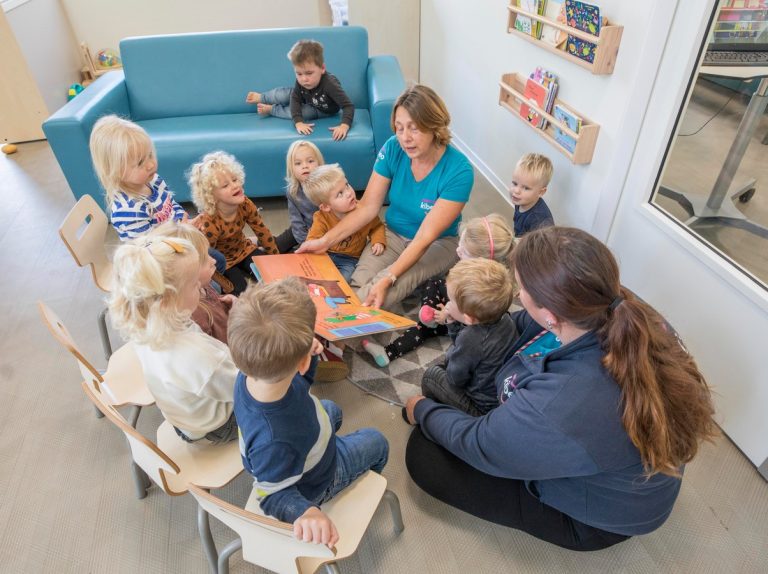
At Kibeo, reading aloud is an important part of the daily routine. It is a festive daily moment that the children and the educational professionals look forward to. The branches fully immerse themselves in the theme of the Picture Book of the Year, inviting reading heroes such as the director, service office colleagues, prominent residents, local heroes, grandparents, aunts and uncles, neighbors, and so on. And as if that weren't enough fun, there are a whole host of cool and educational activities that fit the theme, and at some branches, a reading breakfast takes place.
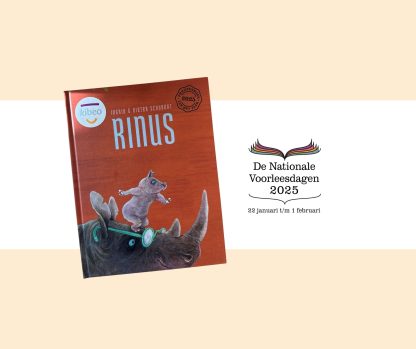
Picture Book of the Year 'Rinus'
The Picture Book of the Year is 'Rinus'. Rinus's grandpa used to be a very wild rhinoceros and strong, super strong! He could lift as many as 100 tree trunks at once. But now that Grandpa is old, he prefers to lie dozing in the shade all day. Today he is looking after Rinus, who mostly just wants to play and romp around.
Together with the reader, the children discuss the book. What is Rinus’s grandpa doing? What is Rinus planning? What can Grandpa do to help Rinus? Do they ever help out themselves? Through play, the children develop socially and emotionally.
Larger vocabulary, empathy, high involvement, taking turns and much more
Children's language development is stimulated during reading aloud. They learn a lot of new words and thus expand their vocabulary, but also develop a good sense of language. For example, because they hear how a sentence is constructed while being read to. But there are many more benefits!
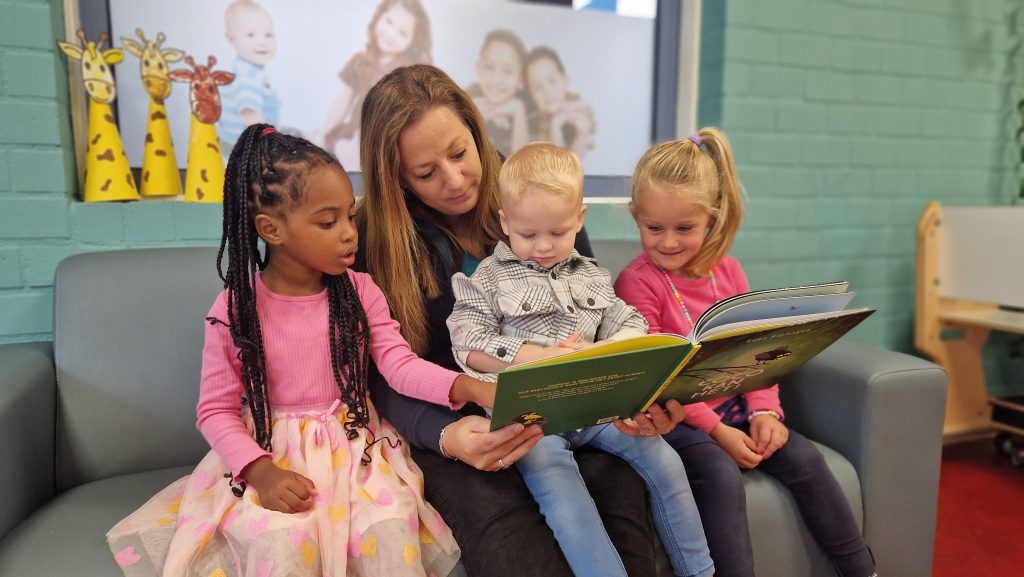
When children find something interesting, they learn it better. This also applies to language. During the read-aloud session, the pedagogical professional asks the children questions, uses the same materials as in the book, and plays with their voice to bring the story to life. In this way, the pedagogical professional ensures a high level of engagement among the children. At the same time, the children also learn social skills while asking questions. For example, they practice waiting their turn, which will come in handy later when having conversations. And by using materials from the book, the children link the words to the correct materials.
The social-emotional development of children is also stimulated during reading aloud. They learn to empathize with the characters in the book, which increases their capacity for empathy. In addition, their imagination is sparked. While being read to, the children visualize the adventures experienced by the main character in the book.
Greater educational opportunities thanks to reading aloud from an early age
Language stimulation enhances children's educational opportunities, especially during the language-sensitive period from age 0 to 6. This is the period when children are even better at learning language. The younger the children are when reading aloud begins, the better. If children have a positive experience with books and reading (aloud) at a young age, they often maintain an interest in reading later in life. Thus, little readers become big readers!